Category: HTML Email Blog
Use Responsive Email Templates for Mobile-Friendly Campaigns
Posted by
Kristin Robinson
on
Jan 21st, 2014
|
no responses
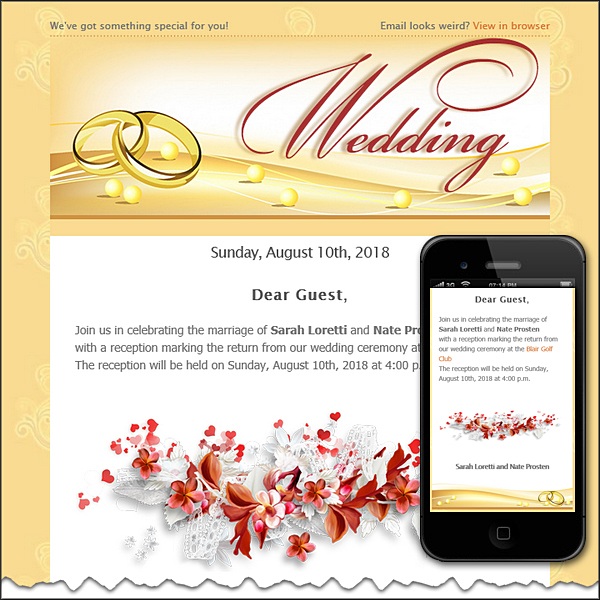
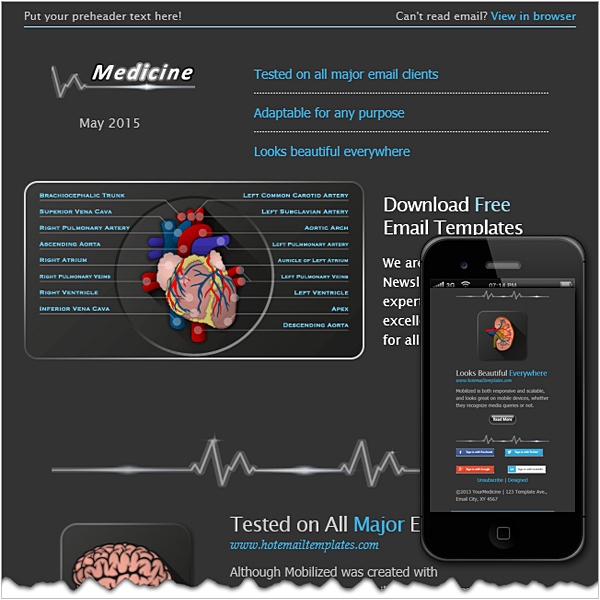
Mobile and tablet Internet usage is skyrocketing. Every day a large quantity of users surf the Internet on handy mobile devices rather than on desktop or laptop computers. And more and more people are pulling out their phones to check their email.Mobile Internet users are a large market that cannot be ignored anymore. Mobile and tablet email opens hit 50% this year, illustrating the need for email marketers to adapt email campaigns for mobile devices. So, designing for mobile has become as important for your emails as it is for your website.
Below are a few tips for mobile-friendly layouts...
Read moreHow to Use Hot Email Templates in WPNewsman plugin
Posted by
Kristin Robinson
on
Jul 31st, 2013
|
no responses
HTML email templates from our library can be used in any email marketing
software. Simply download the template and import it into your email sender
program as a HTML file. Then customize the template as you want to make it fit
your email marketing needs and target audience.
In addition to email sender software, the templates from our collection are
integrated into the WPNewsman plugin. WPNewsman is a newsletter plugin for
WordPress sites that allows collect subscribers using a confirmed opt-in method
and send them email newsletters. Now you can use any template from our library
to create...
Read moreHow to Create a Highly Responsive Email Newsletter
Posted by
Kristin Robinson
on
Oct 22nd, 2012
|
no responses
Every email message consists of the message header and message body. In this article we will explore the best practices for creating the email header and body to get a highly responsive email newsletter.
Email Header
The email header is the information that travels with every email, telling about the sender, route and recipient. Email headers determine who sent the message to whom, and record the path the message follows as it passes through each mail server. The header consists of numerous fields such as “From”, “To”, “Subject”, “Return-path”,...
Read moreHow to Test Your HTML Email Newsletter Before Sending It to the Whole List
Posted by
Kristin Robinson
on
Jun 25th, 2012
|
no responses
One of the best email practices is to test the email before sending it to the whole list. During the test you can not only check how your HTML email is displayed for your recipients but also ensure that your email is delivered into the Inbox but not into the Spam or Bulk email folder.
So, let’s see how easily you can send a test copy of your HTML email newsletter using G-Lock EasyMail.
The first step is setup a couple of test email accounts with the most popular email providers such as AOL, Yahoo!, Hotmail (Live) and Google. Then setup these email accounts in different desktop email clients...
Read more
 Super Affordable In-house Email Marketing Platform for Windows®Send Emails via Amazon SES and Other SMTPs to contacts in your in-house database without export-import. Better delivery, lower costs, no locking. | |
| Download Now! |
 The quality of their work is perhaps one of the highest in the industry.
They went over and above what we asked of them and were constantly in
touch with us to ensure that every aspect of our project was completed
to perfection and on time. We look forward to working with them again and again.
The quality of their work is perhaps one of the highest in the industry.
They went over and above what we asked of them and were constantly in
touch with us to ensure that every aspect of our project was completed
to perfection and on time. We look forward to working with them again and again.
 | ||
 |
| |







 Loading...